Written by Olivia Vaughn
Genetic counseling is becoming an important part of modern healthcare, and yet many individuals and even healthcare providers are unsure when a referral is appropriate. Genetic counselors help patients understand how their personal and family history influence their health by providing guidance on genetic testing options. Whether you are planning a pregnancy, navigating a new diagnosis, or simply trying to understand your family’s medical history, genetic counseling can offer clarity and some direction.
What Is Genetic Counseling?
Genetic counseling helps individuals and families understand the medical, psychological, and familial implications of genetic conditions. A genetic counselor reviews personal and family history, discusses the benefits and limitations of genetic testing, interprets the results, and provides support as patients make decisions about their health.
Genetic counseling is not only for people with known genetic conditions. Many individuals seek counseling simply because they want to better understand their health risks or explore testing options that may guide future care and prevention options.
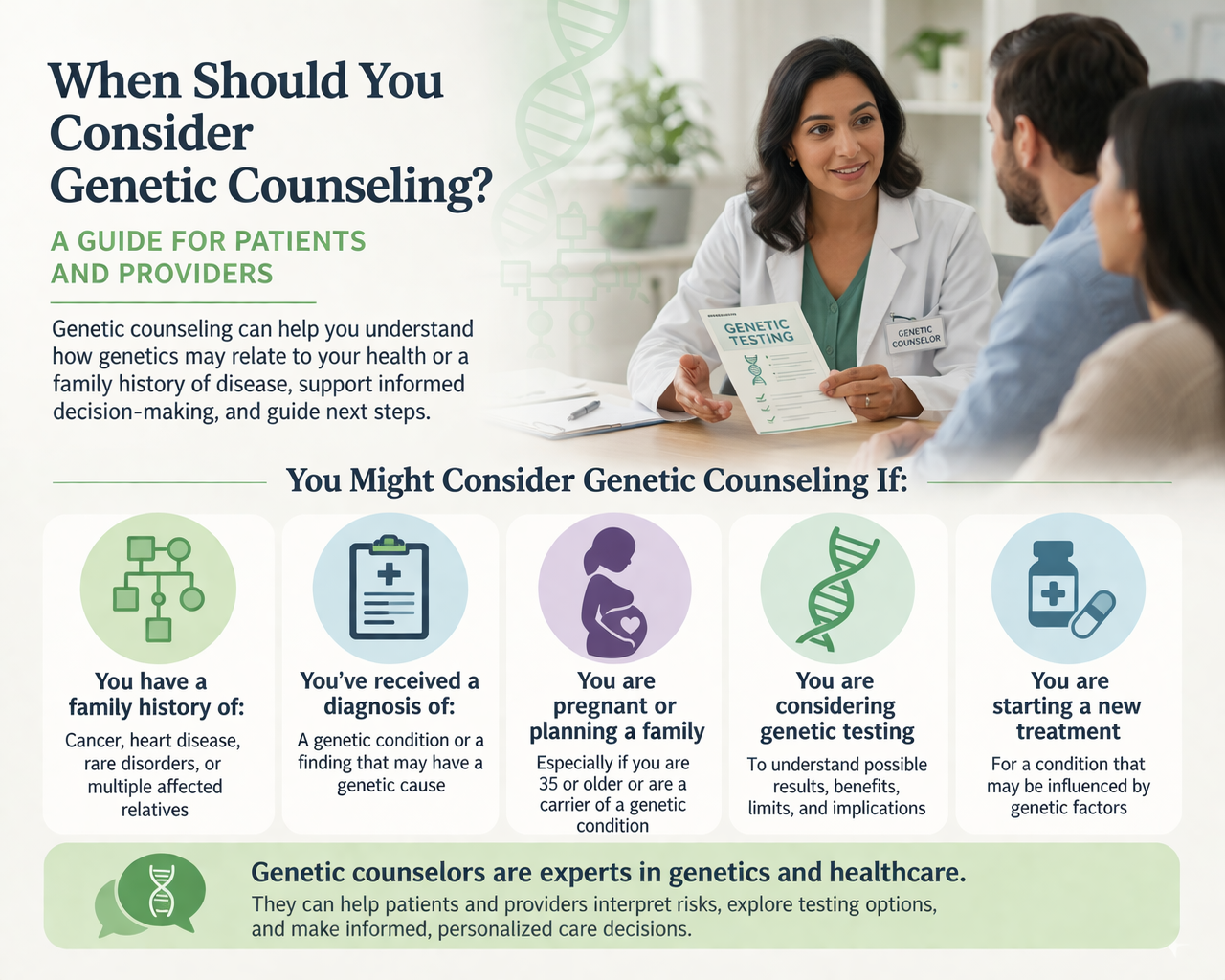
When Should You Consider Genetic Counseling?
There are several situations where meeting with a genetic counselor is warranted. Below are some of the most common reasons patients and providers seek a consultation.
A Personal or Family History of Cancer
Genetic counseling is recommended when there is:
- Cancer diagnosed at an early age
- Multiple relatives with the same or related cancers
- Specific cancers traveling in the family such as ovarian, pancreatic, or metastatic prostate cancer in the family
- A known hereditary cancer gene variant
Understanding inherited cancer risk can guide plans for screening, prevention, and treatment decisions.
Pregnancy or Planning for a Family
Genetic counseling supports individuals and couples who are:
- Considering carrier screening
- Concerned about a family history of genetic conditions
- Exploring reproductive options such as in vitro fertilization with our without preimplantation genetic testing
Early counseling helps families make informed choices and gain the information they need to move forward in family planning.
A Personal or Family History of a Genetic Condition
There are many genetic conditions, but this can include conditions such as:
- Cystic fibrosis
- Muscular dystrophy
- Huntington’s disease
- Hereditary heart conditions
- Neurological or metabolic disorders
Genetic counseling helps clarify inheritance patterns, recurrence risks, and testing options for relatives. You can refer to our services section for more information.
Unexplained Medical Symptoms
Some individuals experience symptoms that may have a genetic basis, such as:
- Developmental delays
- Seizures
- Cardiomyopathy
- Hearing or vision loss
- Connective tissue disorders
Genetic evaluation can help identify underlying causes and guide medical management.
Unexpected Genetic Test Results
Direct-to-consumer tests and medical testing can sometimes unexpectedly reveal:
- Variants of uncertain significance (VUS)
- Unexpected ancestry findings
- Carrier status for genetic conditions
- Health related genetic risks
A genetic counselor can help interpret these results and determine whether additional testing is appropriate.
Medication Side Effects or Questions About How Your Body Processes Medications
Some people experience unusual side effects from medications, need higher or lower doses than expected, or have trouble finding a medication that works well for them. In many cases, genetics can play a role in how your body processes certain drugs. Genetic counseling can help you understand:
- Why certain medications may affect you differently
- Whether genetic testing could guide safer or more effective treatment
- How your results might influence dosing or medication choices
- Which medications may require extra caution based on your genetic makeup
This type of testing can be especially helpful for medications used in mental health, pain management, and certain heart conditions. A genetic counselor can walk you through what the results mean and help you and your healthcare team make informed decisions about your treatment.
How Genetic Counseling Helps Patients and Families
Genetic counseling provides more than just information. Genetic counseling offers support, clarity, and guidance during times that can feel overwhelming. Counselors help patients:
- Understand complex medical information
- Navigate emotional responses to genetic risk
- Access appropriate specialists and resources
- Make informed decisions about testing and care
- Communicate important information with family members
By combining medical expertise with compassionate support, genetic counselors empower individuals to take control of their health.
Why This Matters for Providers
For healthcare providers, knowing when to refer patients to genetic counseling can improve patient outcomes and ensure individuals receive the most appropriate care. Genetic counselors serve as partners in patient management, offering expertise in risk assessment, testing selection, and result interpretation.
Referring patients at the right time can lead to earlier diagnoses, more personalized treatment plans, and better long term health outcomes.
We’re Here to Help
If you believe you or your patient may benefit from genetic counseling, our team at Chicago Genetic Consultants is here to support you. Whether you’re seeking guidance about family history, exploring genetic testing, or navigating a new diagnosis, we’re committed to providing clear, compassionate, and evidence-based care.