Image: https://www.christopherreeve.org/todays-care/living-with-paralysis/health/causes-of-paralysis/spinal-muscular-atrophy/
Written by Olivia Vaughn
August is Spinal Muscular Atrophy (SMA) Awareness Month, a time dedicated to increasing the understanding of one of the most common severe genetic conditions affecting infants and children. SMA is a neuromuscular disorder that leads to progressive muscle weakness and can significantly impact mobility, breathing, and overall quality of life.
Thanks to advances in genetic testing, newborn screening, treatment, and early detection has become more important than ever. Genetic counseling plays a central role in supporting families through this process.
What Is Spinal Muscular Atrophy?
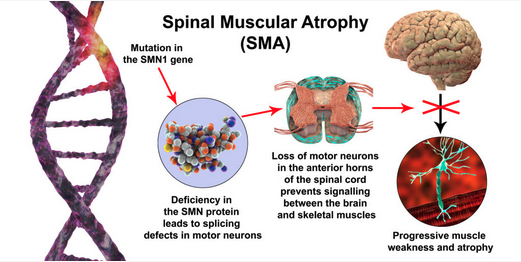
Spinal muscular atrophy is a genetic condition caused by changes in the SMN1 gene, which is responsible for producing a protein essential for motor neuron survival. Without enough of this protein, motor neurons in the spinal cord gradually deteriorate, leading to muscle weakness and atrophy.
SMA varies in severity, and symptoms can appear at different ages:
- Type I (infantile onset): Symptoms appear in the first months of life and can be severe
- Type II: Symptoms typically begin in early childhood
- Type III: Symptoms appear later in childhood or adolescence
- Type IV: Adult-onset SMA, which is typically milder
Early diagnosis is critical because several FDA approved treatments now exist, and they are most effective when started as early as possible.
How SMA Is Inherited
SMA is inherited in an autosomal recessive pattern. This means a child must inherit two nonworking copies of the SMN1 gene (one from each parent) to have SMA. Parents who each carry one nonworking copy are called carriers and carriers typically have no symptoms.
- When both parents are carriers, each pregnancy has:
- 25% chance of having a child with SMA
- 50% chance of having a child who is a carrier
- 25% chance of having a child who is neither a carrier nor affected
Because carriers are healthy and often unaware of their status, carrier screening is an important tool for family planning.
Carrier Screening: Why It Matters?
SMA is one of the most common conditions included in routine carrier screening. Professional medical organizations recommend that all individuals or couples planning a pregnancy be offered SMA carrier screening, regardless of family history. Depending on your ethnic background the chance of being a carrier can be as high as 1 in 35 people to as low as 1 in 117 people.
Genetic counseling helps individuals and couples understand what carrier screening tests for, what it means to be a carrier, how carrier results affect reproductive options, and whether additional testing is recommended for partners or family members. Carrier screening empowers families to make informed decisions about their reproductive plans.
Newborn Screening: Early Detection for Better Outcomes
SMA is now included in newborn screening panels across the United States. This means that most babies are screened shortly after birth, allowing for:
- Early diagnosis
- Rapid access to treatment
- Improved longterm outcomes
If a newborn screening result suggests SMA, genetic counseling helps families understand the next steps, confirm the diagnosis, and connect with specialists who can begin treatment quickly.
Treatment Advances for SMA
In recent years, several groundbreaking therapies have transformed the outlook for individuals with SMA. These treatments aim to increase SMN protein levels or address the underlying genetic cause. Early treatment, ideally before symptoms begin offers the best chance for improved motor function and longterm health.
Genetic counselors help families understand how treatments work, what to expect after diagnosis, how genetic results guide treatment decisions, and what support and resources are available in your area. This guidance can be invaluable during what is often an overwhelming time.
How Genetic Counseling Supports Families Affected by SMA
Genetic counseling provides clarity, support, and guidance for families navigating SMA. Counselors help:
- Interpret carrier screening and newborn screening results
- Explain inheritance patterns and recurrence risks
- Discuss reproductive options, including IVF with PGT
- Provide emotional support and resources
- Coordinate testing for other family members when appropriate
Why Raising Awareness Matters
SMA Awareness Month is an opportunity to highlight the importance of early detection, carrier screening, and more access to treatment. Increased awareness can lead to earlier diagnoses, better outcomes for affected children, more informed reproductive decisions, and overall greater support for families navigating SMA.
By sharing information and encouraging conversations, we can help ensure that every family has access to the knowledge and care they need.
We’re Here to Help
If you have questions about SMA and or carrier screening our team at Chicago Genetic Consultants is here to help answer your questions.